The muni bond market today
The traditional municipal bond market is a colossus, yet it operates like a collection of disconnected rooms rather than a single open floor. Total outstanding US municipal debt exceeds $4 trillion, a figure that underscores the massive scale of infrastructure financing in the United States. This capital fuels everything from local water systems to state highways, making the market a critical component of the broader financial ecosystem.
However, this scale comes with significant friction. The market is notoriously fragmented, with trading dispersed across a vast network of dealers and institutional investors rather than centralized exchanges. This fragmentation creates liquidity challenges, particularly for smaller issuances or less liquid credit names. As noted by SIFMA and academic research, this structure often results in wider bid-ask spreads and higher transaction costs for investors compared to more centralized markets like Treasuries.
The result is a market that is deep but difficult to navigate efficiently. For institutional investors, accessing this yield often requires significant operational overhead and relationship capital. The lack of a unified trading venue means that price discovery can be opaque, and execution is not always guaranteed at fair market value. This structural inefficiency is the primary catalyst for exploring tokenization, which promises to bring the transparency and liquidity of modern digital markets to this ancient asset class.
Understanding these baseline mechanics is essential before evaluating any tokenization solution. The value proposition of blockchain-based munis lies not just in the underlying asset, but in the ability to resolve these specific structural pain points. By moving issuance and trading onto a digital ledger, the market can potentially reduce the cost of capital for municipalities and improve returns for investors.
Early blockchain muni issuances
The conversation around tokenized municipal bonds has moved past whitepapers and pilot programs. We are now seeing actual capital raised through blockchain infrastructure, signaling a shift from theoretical utility to operational reality. The city of Quincy, Massachusetts, took the lead in April 2024 by issuing $10 million in tax-exempt bonds using blockchain technology. This transaction marked the first of its kind in the United States, establishing a precedent for how local governments can leverage distributed ledger technology to democratize debt sales and improve transparency for citizens.
While Quincy’s issuance was a landmark event for municipal finance, the broader ecosystem is expanding rapidly. Major financial institutions are simultaneously testing these mechanisms with different asset classes. For instance, J.P. Morgan recently utilized the Solana blockchain for a tokenized corporate bond issuance, demonstrating that the underlying infrastructure is becoming robust enough to handle high-value, regulated securities. These parallel developments suggest that the plumbing for tokenized muni bonds is being built in real-time, even as the specific regulatory frameworks for tax-exempt municipal debt continue to evolve.
The technical mechanics behind these early issuances are straightforward but significant. By moving bond issuance onto a blockchain, issuers can potentially reduce settlement times from days to minutes and lower the cost of intermediaries. For investors, this means greater accessibility and real-time visibility into bond ownership. As we track the performance of these early adopters, the data will help determine if the promised efficiency gains in infrastructure and yield are sustainable at scale.
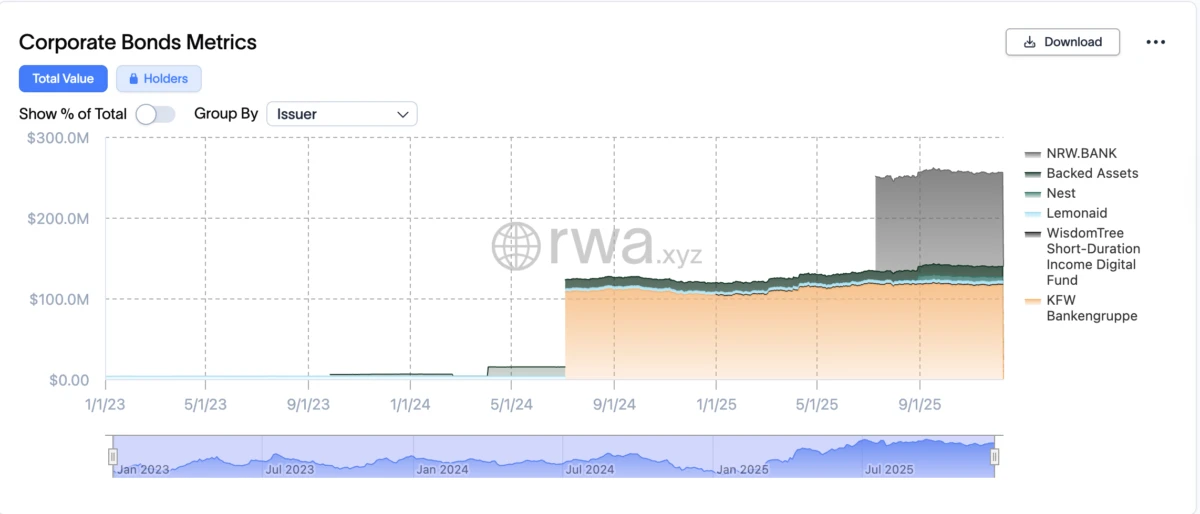
To understand the current market context for these digital assets, it helps to look at the broader fixed-income landscape. The following chart illustrates the recent performance trends in the municipal bond sector, providing a baseline for how traditional muni yields compare to the potential returns of tokenized equivalents.
Infrastructure and settlement speed
A practical choice should survive normal use, maintenance, timing, and budget. If a recommendation only works in an ideal situation, call that out plainly and give the reader a fallback path.
The simplest way to use this section is to write down the must-have criteria first, then compare each option against those criteria before weighing nice-to-have features.
How the SEC Approaches Tokenized Securities
The Securities and Exchange Commission (SEC) is not waiting for the market to self-regulate; it is actively building guardrails for tokenized municipal bonds through its Regulatory Sandbox framework. This approach allows for controlled experimentation where issuers and intermediaries can test digital representations of traditional municipal debt under direct SEC observation. The goal is to modernize market infrastructure without compromising the investor protections that have defined the bond market for decades.
Within this pilot program, tokenized securities are structured as digital equivalents of existing municipal instruments. This means the underlying legal rights, yield mechanics, and maturity profiles remain identical to their physical counterparts. The innovation lies in the settlement layer: by using distributed ledger technology, the SEC aims to reduce settlement times and counterparty risk. However, the agency insists that these digital assets must comply with existing federal securities laws, including registration requirements and anti-fraud provisions.
Investor protection remains the cornerstone of this framework. The SEC requires strict Know Your Customer (KYC) and Anti-Money Laundering (AML) checks at the token level. This ensures that only qualified investors can participate, maintaining the integrity of the municipal market. The framework also mandates transparent reporting of transaction data, allowing regulators to monitor trading activity in real-time. This level of oversight is designed to prevent the kind of market manipulation that has plagued less regulated digital asset spaces.
For market participants, this sandbox offers a clear path to adoption. It provides regulatory certainty, which is essential for large-scale infrastructure investment. By participating in the pilot, firms can help shape the final rules while gaining access to a more efficient secondary market. The SEC’s approach balances innovation with stability, ensuring that tokenization enhances, rather than undermines, the yield and liquidity of municipal bonds.
Yield strategy and market access
Tokenization isn't just a technological upgrade for municipal bonds; it's a structural shift that can compress issuance costs and broaden the investor base. By moving bond settlements onto a blockchain, issuers can reduce the reliance on traditional clearinghouses and custodians. This streamlined infrastructure lowers the friction of trade, which theoretically translates into tighter spreads and higher yields for investors.
The potential for increased inclusion is significant. Traditional muni bonds often have high minimum investment thresholds that exclude smaller retail investors. Tokenization can fractionalize ownership, allowing individual investors to buy smaller lots. This expanded pool of capital can increase demand for municipal debt, putting downward pressure on the yields required by issuers. As Seth Trott noted in his analysis for the Local Government Commission, tokenized public debt has the potential to "expand bond market" and "save on issuance costs" while ultimately "reduc[ing] interest rates" for borrowers.
However, the mechanics of this yield impact depend on market adoption and regulatory clarity. The Securities and Exchange Commission (SEC) and the Municipal Securities Rulemaking Board (MSRB) are closely monitoring these developments to ensure investor protection and market integrity. Until tokenized muni bonds achieve full liquidity and standardization, the yield advantages will likely be incremental rather than transformative.
To understand the current yield landscape, it helps to look at established municipal bond funds. The iShares National Muni Bond ETF (MUB) provides a baseline for how traditional muni exposure is priced in the market today.
No comments yet. Be the first to share your thoughts!