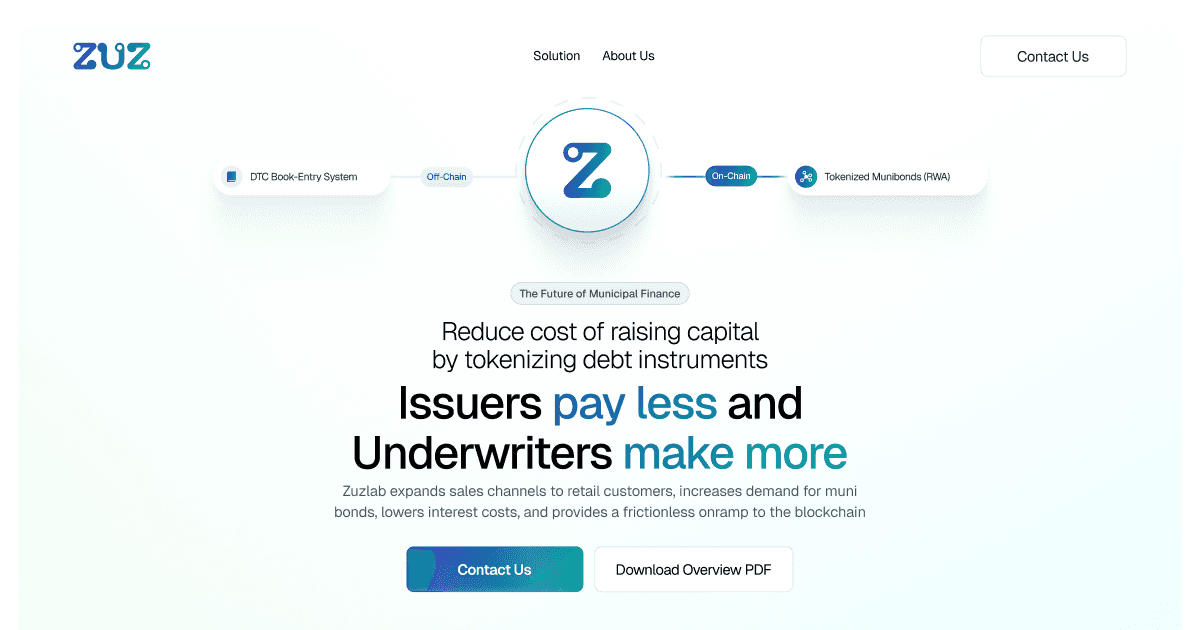
What drives tokenized municipal debt
The municipal bond market has long been defined by its size and stability, yet it remains largely inaccessible to individual investors. Historically, the high minimum purchase requirements and complex secondary market mechanics created a barrier that kept most retail investors on the sidelines. Tokenization addresses this by breaking down large denominations into smaller, transferable digital units, effectively lowering the entry threshold for everyday participants.
Beyond inclusion, the technology offers tangible efficiency gains. By automating settlement and record-keeping through smart contracts, issuers can reduce administrative overhead and potentially lower borrowing costs. This shift from paper-based, multi-day settlement processes to near-instantaneous digital transfers streamlines the entire lifecycle of the debt instrument.
Real-world pilots are already validating these economic benefits. In April 2024, the City of Quincy, Massachusetts, issued its first blockchain-based municipal bond, marking a significant milestone in public finance. This $10 million offering demonstrated how digital tokens could democratize access to local government debt, allowing a broader range of citizens to participate in funding community projects.
These early adopters are not just testing technology; they are redefining the relationship between municipalities and their residents. As regulatory frameworks from the SEC and MSRB evolve to accommodate these digital assets, the infrastructure for a more liquid and inclusive muni bond market is taking shape.
The scale of traditional muni bonds
Before looking at tokenization, it helps to understand the sheer size of the market it aims to serve. The U.S. municipal bond market is a cornerstone of American infrastructure, with outstanding debt hovering around $4 trillion. This capital funds schools, hospitals, roads, and water systems across the country. For most retail investors, this market has been largely inaccessible due to high minimum investments and low trading liquidity.
The market is dominated by tax-exempt bonds, which offer interest payments free from federal income tax. This tax advantage makes them particularly attractive to investors in higher tax brackets. According to SIFMA, the market is deep and diverse, with issuances ranging from general obligation bonds to revenue bonds backed by specific projects like toll roads or utilities. The Municipal Securities Rulemaking Board (MSRB) oversees the transparency and trading of these securities, though electronic trading remains less prevalent than in the corporate bond space.
Recent data highlights a shift in how these bonds are traded. While direct bond trading is complex, municipal bond ETFs have become a primary vehicle for exposure. The iShares National Muni Bond ETF (MUB) is one of the largest, providing a snapshot of broader market sentiment. Tokenization seeks to bring the direct ownership benefits of the underlying bonds to a more liquid, fractionalized format.
How the SEC structures tokenized municipal bonds
The Securities and Exchange Commission (SEC) is moving from theoretical oversight to active experimentation with a regulatory sandbox framework. This pilot program allows issuers and platforms to test tokenized municipal bonds under a supervised environment. The goal is to modernize market infrastructure while ensuring investor protection remains intact.
Within this sandbox, tokenized securities are not new financial products. They are digital representations of traditional municipal debt instruments. The underlying obligation—the promise to repay principal and interest—remains unchanged. What changes is the record-keeping mechanism. By using blockchain technology, the bonds become programmable assets that can settle faster and reduce administrative friction.
This approach mirrors real-world pilots like the one in Quincy, Massachusetts. In that project, the city issued a bond where the ownership records were maintained on a distributed ledger. The SEC’s sandbox framework seeks to standardize such experiments across the industry. It provides a clear path for compliance, reducing the legal uncertainty that has previously slowed adoption.
By treating tokens as digital wrappers for existing debt, regulators can apply current securities laws without rewriting them from scratch. This continuity is crucial for institutional investors who are cautious about regulatory shifts. The sandbox allows for rigorous testing of these digital wrappers, ensuring they meet the same legal standards as their paper predecessors.
The plumbing behind onchain munis
Tokenized municipal bonds don’t trade on a single centralized exchange like stocks. They live on a stack of specialized infrastructure that connects traditional finance with blockchain rails. Think of this as the digital equivalent of the bond dealer network, but automated and transparent.
The foundation is the blockchain itself. Projects use permissioned or public ledgers to record ownership and transfer tokens. This replaces the legacy book-entry system managed by the Depository Trust & Clearing Corporation (DTCC). The goal is to reduce settlement time from days to minutes.
Custodians play a critical role. They hold the underlying legal bonds in trust while issuing the corresponding digital tokens. This ensures that every token on the chain is backed by a real, tradable security. Without regulated custodians, the token would be a speculative derivative, not a bond.
Secondary trading venues are emerging to provide liquidity. Unlike the fragmented over-the-counter (OTC) market for traditional munis, these platforms offer more visibility into pricing and order flow. This structure aims to lower costs for investors, addressing the inefficiencies highlighted by researchers like those at the American Economic Association.
| Feature | Traditional Munis | Tokenized Munis |
|---|---|---|
| Trading Venue | Fragmented OTC dealers | Centralized onchain platforms |
| Settlement | T+1 or T+2 (days) | Near-instant (minutes) |
| Transparency | Limited post-trade data | Real-time onchain records |
| Custody | DTCC / Banks | Regulated digital custodians |
Strategy for onchain muni exposure
Gaining exposure to municipal bonds onchain requires balancing the liquidity benefits of tokenization with the regulatory safeguards of traditional finance. The market is currently split between direct token purchases and traditional exchange-traded funds (ETFs). While tokenization offers potential for fractional ownership and 24/7 settlement, it remains a pilot-stage innovation. Traditional muni ETFs, by contrast, offer established liquidity and regulatory clarity.
Evaluate tokenized opportunities carefully
Tokenized muni bonds are not yet mainstream. Most offerings are restricted to qualified investors and operate under specific regulatory frameworks. Before committing capital, verify the regulatory status of the issuer and the security of the custodian. The market is still evolving, with real-world pilots like Quincy, Massachusetts, demonstrating the potential for efficient settlement. However, these examples are exceptions rather than the rule. Treat tokenized munis as a high-risk, experimental allocation rather than a core holding.
Compare with traditional muni ETFs
For most investors, traditional muni ETFs provide a more straightforward path to municipal bond exposure. These funds offer diversification across hundreds of issuers and are subject to SEC oversight. They also provide daily liquidity, whereas tokenized bonds may face illiquidity risks depending on the platform. Consider your risk tolerance and regulatory comfort level. If you prioritize stability and ease of access, a broad muni ETF is likely the better choice. If you are interested in the technological future of fixed income, a small allocation to tokenized pilots may warrant exploration, but only after thorough due diligence.
Checklist for onchain muni evaluation
-
Verify regulatory status of the tokenized bond issuer
-
Check custodian security and insurance coverage
-
Assess liquidity and secondary market depth
-
Review legal documentation for investor rights
-
Confirm tax treatment of tokenized interest payments
Market context
Understanding the broader municipal bond market is essential. Rates and yields fluctuate based on Federal Reserve policy and economic conditions. Keep an eye on the broader market trends to inform your allocation strategy. The following chart illustrates the recent performance of the Nasdaq Composite, which can serve as a proxy for broader market sentiment affecting fixed income investments.
Tools and Resources for Tracking Tokenized Municipal Bonds
Tracking tokenized municipal bonds requires a mix of traditional market data and emerging on-chain analytics. Start with official sources like the Securities and Exchange Commission (SEC) and the Municipal Securities Rulemaking Board (MSRB) for regulatory filings and disclosure documents. These platforms provide the foundational transparency needed before assessing liquidity or price discovery.
For real-time market insights, SIFMA offers comprehensive statistics on issuance and outstanding debt. While tokenized bonds are still a niche segment, monitoring traditional muni bond trends helps contextualize the broader market movement. Keep an eye on major financial institutions piloting these assets, such as J.P. Morgan’s recent work with Solana for tokenized corporate bonds, which signals growing institutional adoption.
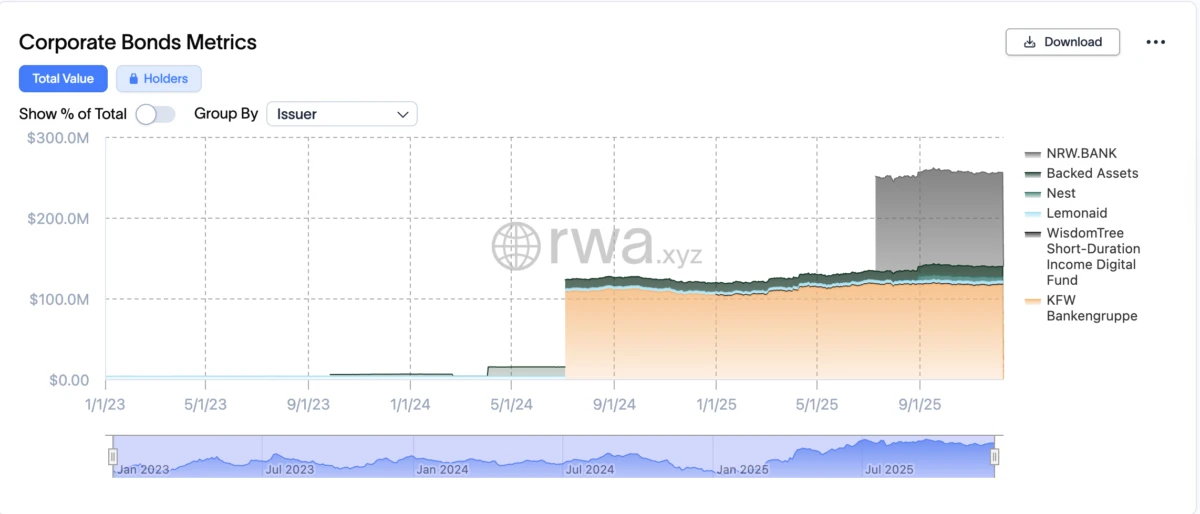
To deepen your understanding, consider these resources for further research:


As an Amazon Associate, we may earn from qualifying purchases.
No comments yet. Be the first to share your thoughts!