What tokenized municipal bonds actually are
Tokenized municipal bonds are digital representations of traditional bond instruments recorded on a blockchain or distributed ledger. To understand them, you must separate the underlying debt from the digital token that tracks ownership. The underlying asset remains the same: a loan made to a state or local government entity to fund public projects like schools, roads, or water systems. The bond issuer still owes the principal and interest payments according to the original legal agreement.
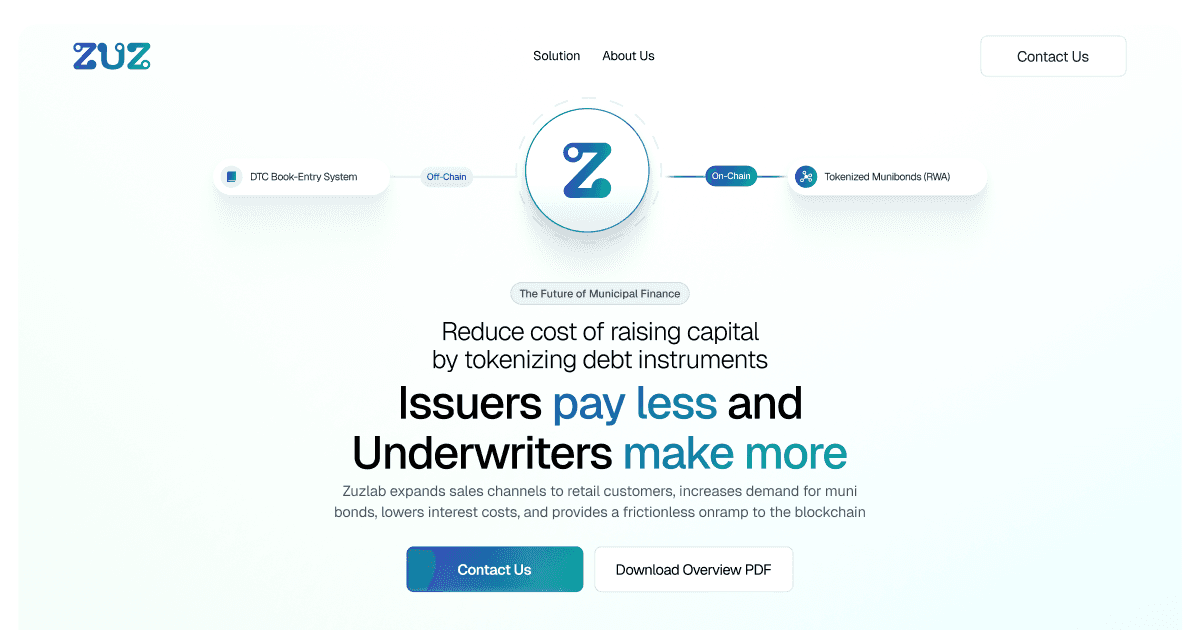
The token is simply the new way to hold and transfer that ownership. Instead of relying on a central clearinghouse like DTC (Depository Trust & Clearing Corporation) to maintain a ledger of who owns which bond, the ownership records are stored on a blockchain. This digital token serves as proof of ownership and entitles the holder to receive interest payments and the return of principal at maturity. The token does not change the legal nature of the bond; it changes how that ownership is recorded and transferred.
This separation is critical for regulatory clarity. The Securities and Exchange Commission (SEC) and the Municipal Securities Rulemaking Board (MSRB) regulate the underlying bond, not the blockchain technology itself. The token is a wrapper for the security. Any smart contract used to automate payments or manage compliance is a tool for execution, not a replacement for the legal debt obligation. The issuer’s creditworthiness and the project’s viability remain the primary drivers of value, just as they do with traditional bonds.
The distinction matters because it clarifies risk. You are not investing in a cryptocurrency or a speculative digital asset. You are investing in a municipal bond that happens to be held in a digital format. The risks associated with the blockchain—such as technical failures or security breaches—are secondary to the credit risk of the municipality. However, the potential for increased liquidity and reduced settlement times is a significant structural advantage over the traditional, slower settlement processes.
The SEC sandbox and regulatory framework
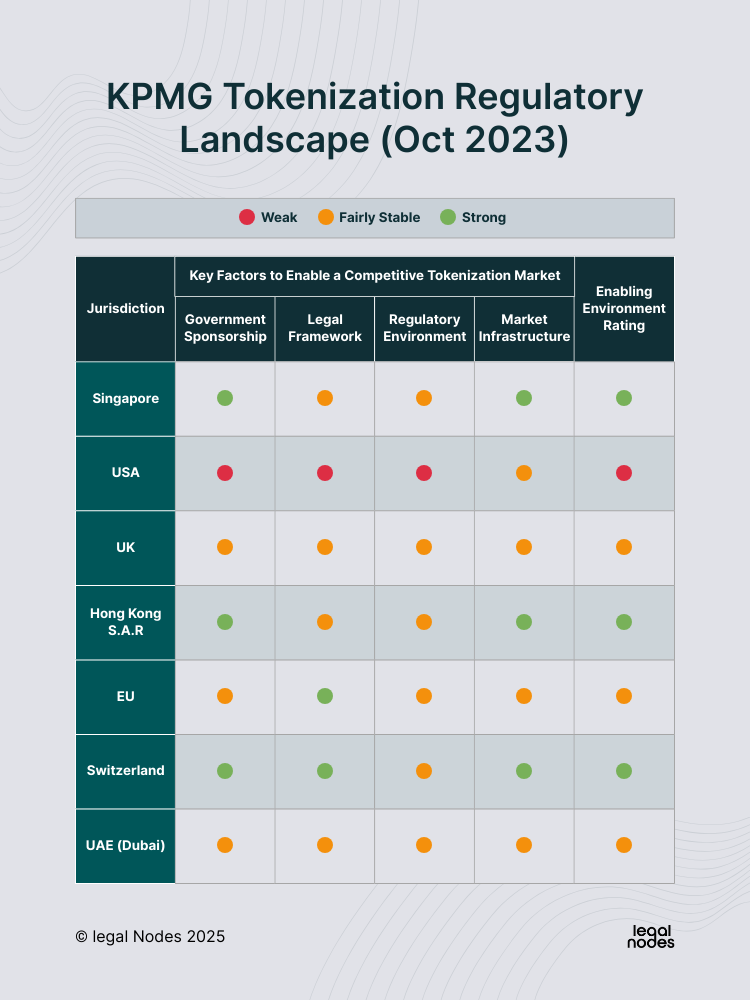
The path to tokenized municipal bonds is paved with regulatory caution. The Securities and Exchange Commission (SEC) has moved away from broad, unregulated experimentation, instead favoring a controlled pilot environment. This "sandbox" approach allows market participants to test the technical infrastructure of tokenization while remaining firmly under the existing securities laws that govern traditional debt.
Tokenized securities within the pilot program are structured as digital representations of traditional municipal debt instruments. This distinction is critical: the tokens do not create a new asset class but rather serve as a more efficient ledger for existing obligations. By keeping the underlying legal structure identical to paper-based bonds, regulators can apply familiar compliance standards to new technology.
The SEC’s stance is clear: tokenization is a delivery mechanism, not a regulatory exemption. Digital representations of municipal debt must adhere to the same disclosure and reporting requirements as their physical counterparts.
This framework ensures that investor protections remain intact. Market participants must comply with Municipal Securities Rulemaking Board (MSRB) rules alongside SEC regulations, creating a dual-layer compliance environment. While this may seem burdensome, it provides the legal certainty necessary for institutional capital to enter the space.
The pilot program focuses on the operational mechanics of issuance, settlement, and record-keeping. By isolating these variables, the SEC can identify friction points without disrupting the broader municipal market. This measured pace reflects the high-stakes nature of municipal finance, where stability is prioritized over speed.
Smart contracts automate coupon payments
In the traditional municipal bond market, interest payments are a logistical exercise. The issuer pays the clearing agency, which distributes funds to custodians, who then credit individual investor accounts. This chain introduces delays and administrative overhead. Tokenization replaces this relay race with a direct handoff.
A smart contract is a piece of software stored on a blockchain that automates the execution of agreed-upon terms. For municipal bonds, this means the contract holds the obligation to pay interest and principal. When a payment date arrives, the code triggers automatically, transferring funds from the issuer’s designated wallet to all token holders simultaneously. There is no middleman to process the batch or reconcile accounts.
This automation reduces friction significantly. The Municipal Securities Rulemaking Board (MSRB) outlines the standard mechanics of municipal bonds, noting that investors lend money in exchange for regular interest payments and the return of face value. Smart contracts enforce this promise without manual intervention. They eliminate the risk of missed payments due to administrative error and ensure that every holder receives their share at the exact same moment.
The result is a cleaner flow of capital. Instead of waiting days for settlements to clear through traditional banking rails, investors see their interest credited instantly. This efficiency is not just a technical upgrade; it is a structural improvement that aligns the digital asset with the reliability expected in fixed-income markets.
Liquidity and fractional access
The traditional municipal bond market has long been defined by its structure: high minimum denominations and an over-the-counter dealer network. For the average investor, this creates a significant barrier to entry. Most individual munis trade in blocks of $5,000 or more, with secondary market liquidity often thin for smaller issuers. You might find yourself holding a bond you want to sell, only to discover that finding a buyer requires waiting for a dealer to step in, potentially at a discounted price.
Tokenization changes this dynamic by introducing fractional ownership and onchain settlement. Instead of buying a whole bond, investors can purchase fractions, lowering the capital required to diversify across different municipalities. More importantly, the secondary market shifts from a dealer-mediated model to a more direct, peer-to-peer or automated marketplace. This structure aims to reduce the bid-ask spread and allow for faster trade execution, mimicking the liquidity found in equity markets.
The table below contrasts the mechanics of these two systems. While traditional munis offer regulatory protections and established tax benefits, tokenized versions prioritize accessibility and speed.
| Feature | Traditional Munis | Tokenized Munis |
|---|---|---|
| Minimum Investment | $5,000+ | $10-$100 |
| Settlement Time | T+1 to T+2 | Near-instant |
| Market Hours | 9 AM - 5 PM EST | 24/7 |
| Secondary Liquidity | Dealer-mediated, variable | Onchain, potentially higher |
| Fractional Ownership | No | Yes |
It is important to note that while the technology promises improved liquidity, the actual depth of the secondary market for tokenized munis is still developing. The regulatory framework, overseen by the SEC and MSRB, is adapting to these new structures, but the ecosystem remains nascent compared to the decades-long history of traditional municipal debt. Investors should view tokenization as an evolving tool for access rather than a guaranteed solution for immediate liquidity.
Onchain Credit Market Structure
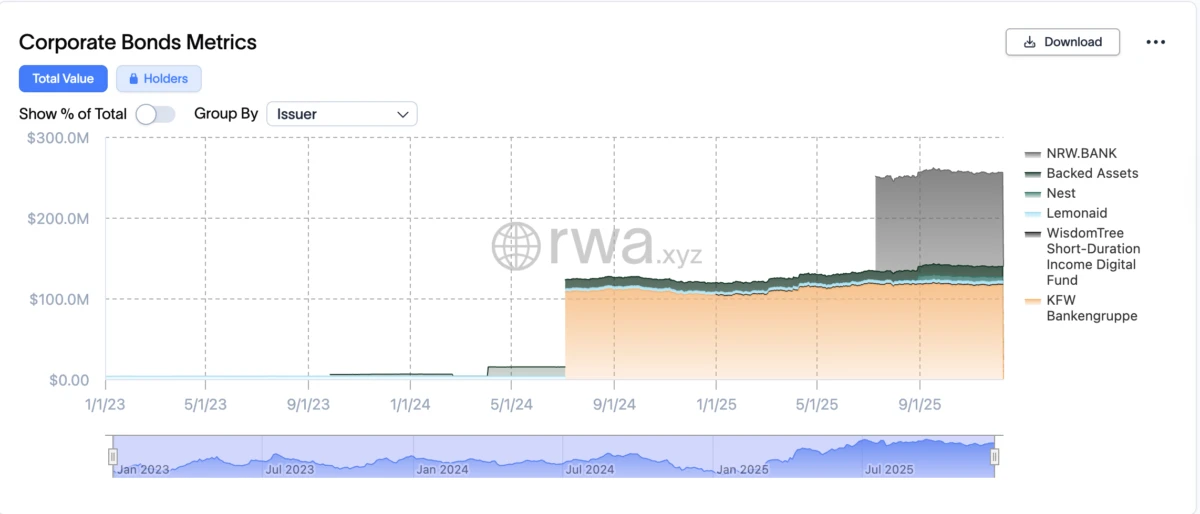
Tokenized municipal bonds introduce a layer of digital liquidity to traditionally illiquid debt markets. Unlike spot equities, these assets often trade on private or semi-private ledgers, making public volume data sparse. To understand the underlying risk and volatility, we look to the broader municipal bond ETF space, which serves as a reliable proxy for traditional muni market sentiment.
The chart below tracks the Invesco National Municipal Bond ETF (MNI), reflecting the baseline performance of the underlying municipal debt market. While tokenized versions may trade at premiums or discounts based on smart contract utility and settlement speed, their fundamental value remains tethered to the credit quality of the issuing municipalities.
This proxy helps investors gauge how macroeconomic shifts, such as Federal Reserve rate decisions, impact the broader fixed-income landscape. For tokenized assets, this baseline volatility is the starting point for assessing potential price action before accounting for onchain-specific factors like staking yields or protocol fees.
Due diligence for tokenized bond investors
Tokenized US Municipal Bonds works best as a clear sequence: define the constraint, compare the realistic options, test the tradeoff, and choose the path with the fewest hidden costs. That order keeps the advice usable instead of decorative. After each step, pause long enough to check whether the recommendation still fits the reader's actual situation. If it depends on perfect timing, unusual access, or a best-case budget, include a simpler fallback.
No comments yet. Be the first to share your thoughts!