What tokenized municipal bonds actually are
At its core, tokenization is a settlement rail upgrade. It is not a change to the underlying legal debt instrument, nor does it alter the fundamental nature of the bond. A tokenized municipal bond remains a standard debt obligation of a public issuer, carrying the same security pledge and tax treatment as its traditional counterpart. The difference lies entirely in how the bond is issued, tracked, and settled.
Think of the blockchain as a highly efficient ledger. In the traditional system, a bond is represented by a paper certificate or, more commonly today, by entries in a centralized depository like the Depository Trust & Clearing Corporation (DTCC). When you buy a tokenized bond, you are still lending money to a city, state, or public agency. The interest payments, maturity dates, and legal covenants are identical to what you would find in a standard municipal bond. The "token" is simply a digital representation of that ownership, stored on a distributed ledger.
This distinction is critical for investors. The "token" does not create new rights or benefits; it merely automates the execution of existing ones. Smart contracts can automate the distribution of interest payments and the repayment of principal, reducing administrative friction and potential for human error. However, the legal enforceability of the bond still rests on traditional public finance law, not on code alone.
By moving the settlement process on-chain, tokenization promises greater efficiency and transparency. It can lower barriers to entry, allowing smaller investors to participate in infrastructure financing that was previously accessible only to large institutions. But beneath the digital surface, the bond is still a bond: a promise to repay debt with the backing of a public entity.
This approach aligns with recent regulatory explorations. For instance, the SEC has examined tokenized municipal instruments under distributed ledger technology, confirming that the underlying assets remain subject to existing securities laws. Similarly, industry reports emphasize that the primary value proposition is operational efficiency—reducing the time and cost of settlement—rather than creating a new asset class.
Understanding this foundation helps separate marketing hype from practical utility. Tokenization is not about replacing municipal finance; it is about modernizing the infrastructure that supports it. The bond itself is unchanged. The way we track and transfer it is what evolves.
Infrastructure use cases and legal frameworks
Tokenized municipal bonds are not changing the underlying debt obligation; they are changing how that obligation is settled and administered. As the SEC sandbox guidelines outline, these instruments remain legally equivalent to traditional bonds but leverage distributed ledger technology (DLT) for greater efficiency. For General Obligation Bonds, authorized uses typically include infrastructure construction, equipment acquisition, and public facility renovation.
The primary advantage for issuers is operational. Issuing a tokenized bond on traditional rails can provide significant efficiencies in settlement and compliance. Smart contracts automate the execution of agreements, reducing the friction between the public sector and the capital markets. This allows municipalities to access capital more directly, lowering barriers to entry for infrastructure investment by reducing the minimum investment required.

This legal and technical alignment means that the same security pledge and tax treatment apply whether the bond is held in a traditional book-entry system or on a blockchain. The shift is structural, not substantive. It enables faster settlement and transparent compliance without altering the fundamental promise to repay the debt.
Market research and adoption trends
The transition of municipal bonds onto distributed ledgers is not a sudden market shock, but a slow, deliberate shift in infrastructure financing. Industry observers describe the timeline as "eventual," reflecting a cautious approach where major financial institutions pilot tokenization rather than replace traditional rails overnight. This steady adoption curve prioritizes regulatory clarity and operational efficiency over speculative speed.
Major issuers and technology providers are currently testing the mechanics of tokenized debt. The U.S. Securities and Exchange Commission (SEC) has facilitated sandbox environments to explore how tokenized municipal instruments function under existing securities laws. These pilots focus on automating compliance and streamlining the settlement process for General Obligation Bonds, which typically fund infrastructure construction and public facility renovations.
The primary driver for this adoption is operational efficiency. Issuing a tokenized bond on a distributed ledger reduces the friction inherent in traditional settlement cycles. By automating interest payments and principal redemption through smart contracts, issuers can lower administrative costs and provide investors with more transparent, real-time data on bond status.
This efficiency is reshaping how regulated funds connect savers to public infrastructure. As tokenization matures, it lowers the barriers to entry for smaller investors while maintaining the security and tax treatment of traditional municipal debt. The market is moving toward a hybrid model where tokenized assets complement, rather than immediately displace, conventional public finance mechanisms.
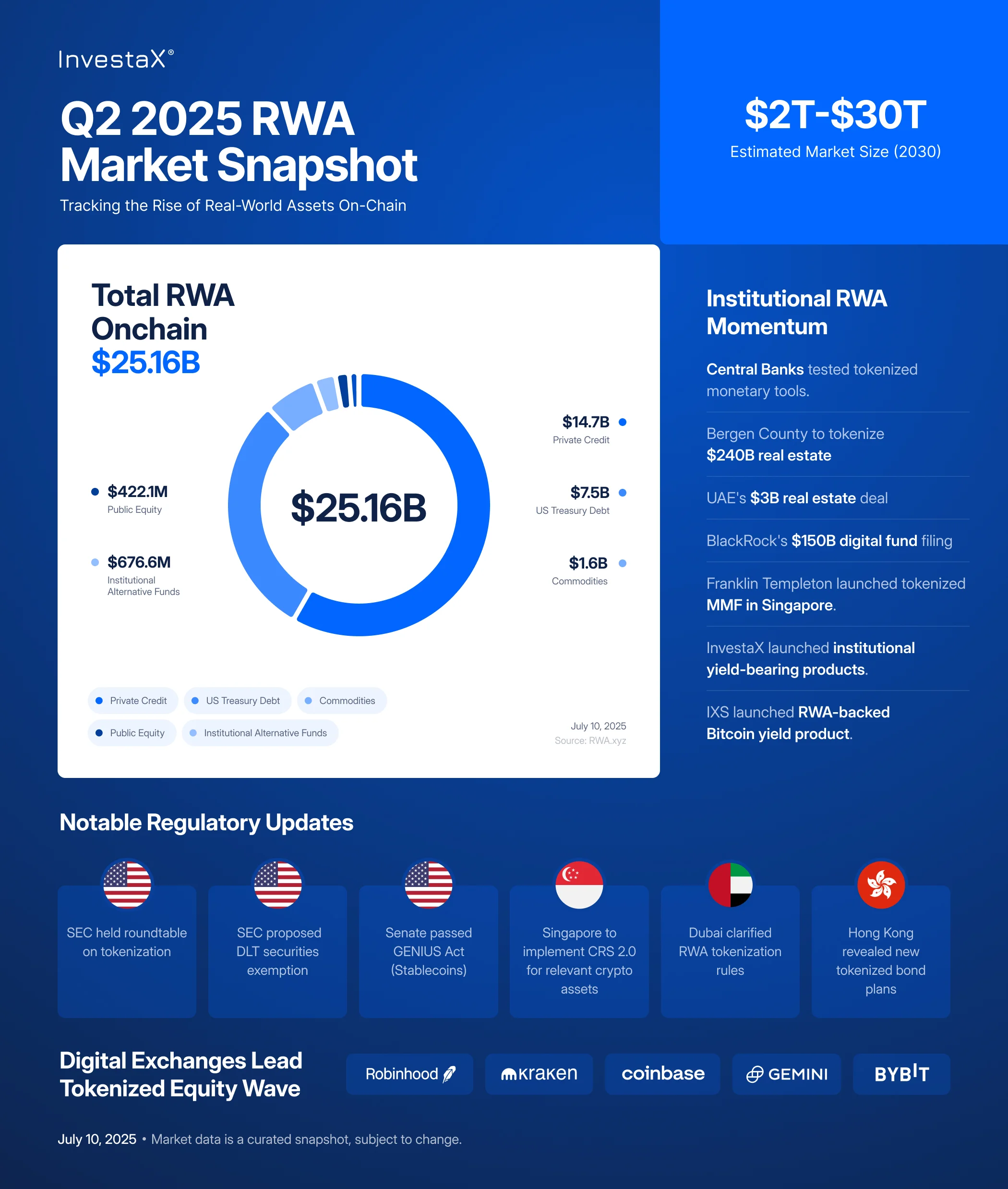
The broader municipal bond market provides the context for these tokenization efforts. As liquidity and yield environments shift, the efficiency gains of blockchain-based settlement become increasingly attractive to institutional players looking to optimize capital allocation in public works.
Issuer strategy and operational choices that change the plan
For municipal issuers, the shift from traditional bond issuance to tokenized infrastructure bonds is not about changing the debt instrument itself, but about modernizing the plumbing behind it. As the Bond Buyer notes, issuing a tokenized bond can provide more efficiencies than traditional rails, particularly in how capital is managed and distributed. The legal obligation remains identical: a tokenized muni bond is still a debt obligation with the same security pledge and tax treatment as its paper counterpart [src-serp-6].
Efficiency gains vs. regulatory complexity
The primary draw for issuers is operational speed. Traditional muni issuance involves a lengthy syndication process with multiple intermediaries—underwriters, transfer agents, and clearinghouses—each adding layers of cost and time. Tokenization automates these backend processes through smart contracts, which are software stored on a blockchain that execute agreements automatically [src-serp-2]. This can significantly reduce the time from announcement to settlement.
However, this efficiency comes with a steep learning curve in regulatory compliance. Issuers must manage the intersection of traditional securities law (SEC) and emerging digital asset frameworks. The SEC’s sandbox research highlights that while tokenization offers utility, it requires rigorous adherence to existing disclosure standards while adapting to distributed ledger technology (DLT) [src-serp-3]. Issuers must ensure their digital infrastructure meets the same fiduciary duties as their physical ones.
Comparing the operational models
The table below outlines the key operational differences from an issuer’s perspective. While tokenization promises lower long-term costs and faster settlement, it currently demands higher upfront technical investment and specialized legal review.
| Feature | Traditional Muni Issuance | Tokenized Muni Issuance | Issuer Impact |
|---|---|---|---|
| Settlement Time | T+2 to T+3 days | Near real-time (minutes) | Faster capital availability |
| Intermediaries | Underwriters, Transfer Agents, Clearinghouses | Smart Contracts, Digital Asset Custodians | Reduced intermediary fees |
| Compliance Automation | Manual reporting and record-keeping | Automated via smart contracts | Lower administrative overhead |
| Initial Setup Cost | Standard underwriting and legal fees | High upfront tech and legal integration | Higher initial capital outlay |
| Investor Access | Institutional and accredited investors | Broader access, potentially fractional | Wider investor base |
| Regulatory Clarity | Well-established legal precedent | Evolving DLT and securities frameworks | Higher legal risk and advisory costs |
Strategic considerations for adoption
Issuers must weigh these tradeoffs against their specific infrastructure goals. Tokenization can lower barriers to entry, potentially attracting a broader range of investors to public works projects [src-serp-1]. This can be crucial for smaller municipalities that lack the scale to attract large institutional investors in traditional markets. However, the technological barrier remains significant. Issuers need robust IT infrastructure and partners who understand both public finance and blockchain technology.
The decision to tokenize is less about immediate cost savings and more about long-term strategic positioning. As the market matures, issuers who adopt tokenized rails early may benefit from reduced operational friction and access to new capital pools. Yet, for now, the regulatory landscape requires careful management. Issuers should prioritize partnerships with established digital asset platforms that can handle the compliance burden while delivering the promised efficiencies [src-serp-4].
How tokenization opens infrastructure investing
Traditional municipal bonds have long been the backbone of American infrastructure, funding everything from road repairs to school construction. Yet for the average investor, these assets remain out of reach. Historically, muni bonds are sold in large minimum increments, often requiring tens of thousands of dollars to enter the market. This high barrier to entry has effectively locked smaller investors out of a asset class that offers tax-advantaged yields and relative stability.
Tokenization changes this dynamic by breaking bonds into digital tokens, enabling fractional ownership. As noted by the World Economic Forum, this process lowers the minimum investment required, allowing individuals to buy small slices of public works projects. Instead of purchasing a single $100,000 bond, an investor might acquire tokens representing a $50 or $100 stake. This democratization aligns with the broader goal of connecting savers directly to the infrastructure that supports their communities, as highlighted by the Investment Company Institute.
Beyond accessibility, tokenization introduces liquidity improvements that traditional muni markets lack. Standard municipal bonds are typically held to maturity, with secondary trading being slow and expensive. On-chain tokenization allows for near-instant settlement and easier transfer of ownership. While the market is still evolving, early adopters suggest that these efficiencies can reduce administrative costs and improve price discovery. The Securities and Exchange Commission’s sandbox initiatives are currently exploring how these digital instruments can operate within existing regulatory frameworks to ensure investor protection while fostering innovation.
No comments yet. Be the first to share your thoughts!