What tokenized municipal bonds actually are
Tokenized municipal bonds are digitized versions of traditional debt securities issued by states, cities, and counties to fund public infrastructure like schools, roads, and water systems. Unlike stablecoins or generic cryptocurrency tokens, these instruments represent a direct, legally binding claim on the issuer’s ability to repay principal and interest. The core innovation lies not in the underlying asset, but in how ownership is recorded and managed on a distributed ledger.
Think of tokenization as upgrading the back office rather than changing the product. The bond itself remains a regulated debt obligation, but the processes surrounding it—settlement, compliance, and interest payments—move from slow, manual paperwork to automated, code-driven execution. This shift reduces friction for institutional investors and opens the door for smaller capital participation without sacrificing the regulatory safeguards that define the municipal market.
The legal foundation rests on established securities laws, with recent frameworks like the SEC’s sandbox for tokenized municipal instruments providing clarity on how these digital assets fit into existing compliance structures. By embedding regulatory rules directly into the token’s smart contract, issuers can automate tax-exempt status verification and investor accreditation checks, ensuring that every transaction adheres to federal and state requirements.
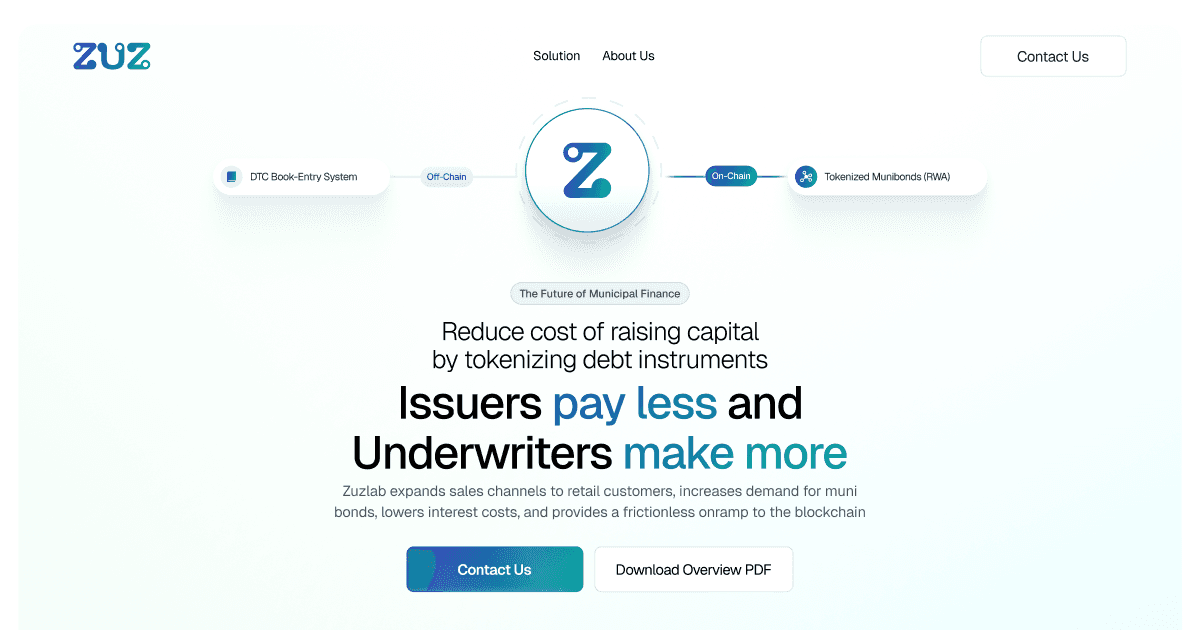
This approach combines the stability of traditional municipal finance with the efficiency of blockchain technology. For investors, it means faster settlement times, reduced counterparty risk, and greater transparency. For issuers, it offers a streamlined path to capital formation that can lower borrowing costs and expand the investor base beyond traditional institutional players.
The onchain infrastructure stack
Tokenized municipal bonds rely on a layered technical architecture that mirrors traditional finance but replaces paper with code. At the base is the blockchain, which acts as a shared, immutable ledger for ownership records. Above that, smart contracts handle the logic—automating interest payments, enforcing transfer restrictions, and managing compliance without manual intervention. This stack transforms how muni bonds are issued and traded, shifting the focus from back-office reconciliation to real-time settlement.
Blockchain and Smart Contracts
The blockchain serves as the single source of truth for token ownership. Unlike traditional systems where multiple custodians maintain separate ledgers, a permissioned blockchain ensures all participants see the same data. This reduces reconciliation errors and settlement times from days to minutes. Smart contracts, stored on this ledger, automate the bond’s lifecycle. When a municipality issues a bond, the contract defines the terms: interest rates, maturity dates, and covenants. When a payment is due, the contract executes automatically, distributing funds to token holders. This automation cuts administrative costs and reduces the risk of human error, making smaller bond sizes viable for digital issuance.
Oracles and Compliance
Smart contracts cannot access external data on their own. Oracles bridge this gap by feeding real-world information—such as interest rates or tax revenue data—into the blockchain. In the context of muni bonds, oracles ensure that payments are triggered by accurate, verified financial events. Compliance is embedded directly into the token’s code. Regulatory requirements, such as Accredited Investor status or geographic restrictions, are enforced at the protocol level. If a user attempts to transfer a token to an ineligible wallet, the transaction is rejected automatically. This "programmable compliance" ensures that the bond remains compliant with SEC and IRS regulations without requiring manual checks at every transfer.

The integration of these layers creates a more efficient market. By automating compliance and settlement, tokenization reduces the friction that has historically kept municipal bonds illiquid. As regulatory clarity improves, this infrastructure will likely become the standard for digital public finance, offering municipalities a more cost-effective way to raise capital while giving investors greater transparency and access.
Compliance and regulatory hurdles
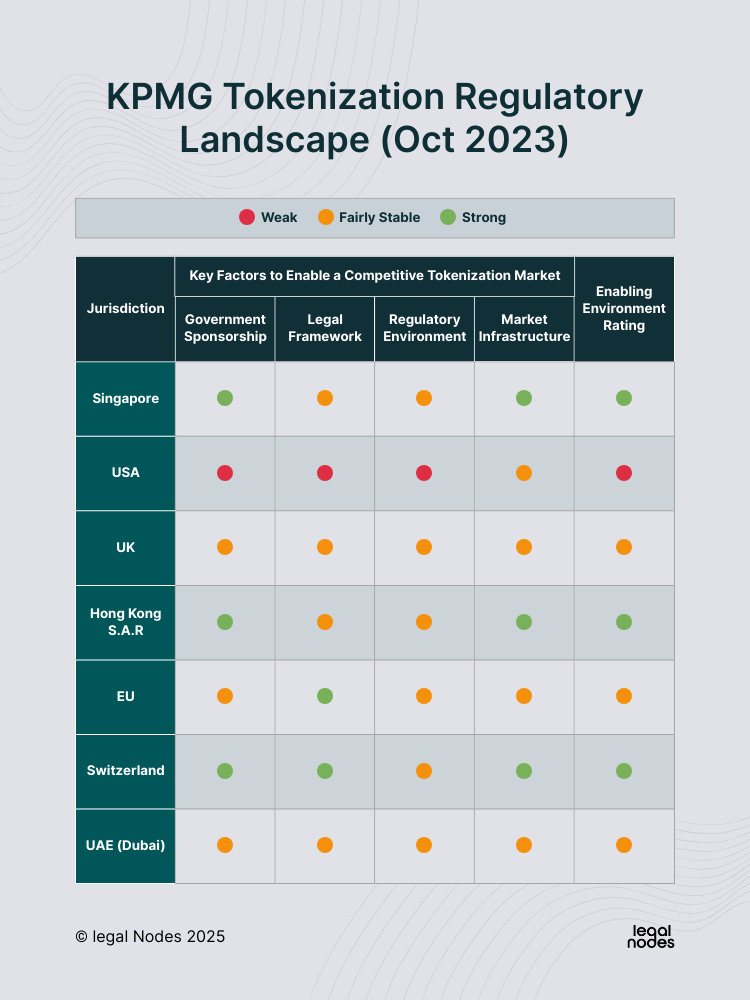
Tokenizing municipal bonds requires navigating a dual regulatory landscape governed by the Securities and Exchange Commission (SEC) and the Municipal Securities Rulemaking Board (MSRB). While these frameworks protect investors, they also create friction for digital asset adoption. The core challenge lies in mapping traditional, paper-heavy compliance requirements onto automated blockchain infrastructure without violating existing securities laws.
The SEC’s recent concept paper on tokenized municipal instruments provides a sandbox framework for this transition. It suggests that distributed ledger technology can actually streamline compliance through "automated compliance" mechanisms. By embedding regulatory rules directly into smart contracts, issuers can automate reporting and eligibility checks, reducing the administrative burden that traditionally slows down municipal capital formation.
However, the MSRB’s existing rules on trade reporting and best execution still apply. Tokenization complicates this by introducing new intermediaries and changing the mechanics of trade settlement. To address this, the industry is focusing on interoperability between legacy systems and blockchain networks. This ensures that every trade remains transparent and auditable, satisfying MSRB requirements while leveraging the speed of digital assets. The goal is not to bypass regulation, but to make it more efficient and less prone to human error.
Yield benefits versus traditional munis
Tokenized municipal bonds (tokenized munis) change how investors access fixed income by shifting settlement, custody, and liquidity mechanics. The yield gap between tokenized and traditional munis isn't just about coupon rates; it's about the cost of holding the asset and how quickly capital can move.
Traditional munis trade over-the-counter through broker-dealers. Settlement takes T+2 days, and minimum investments often sit at $5,000 per bond, which fragments liquidity and raises the barrier for smaller investors. Tokenized versions, built on regulated blockchain rails, can settle instantly (T+0) and fractionalize ownership down to small dollar amounts. This reduces friction costs and allows capital to be deployed more efficiently.
The table below compares the structural differences that directly impact yield and liquidity.
| Feature | Traditional Munis | Tokenized Munis | Yield Impact |
|---|---|---|---|
| Settlement | T+2 days | T+0 (instant) | Faster capital recycling |
| Minimum Investment | $5,000+ per bond | $10–$100 (fractional) | Lower entry cost |
| Liquidity | Low (OTC market) | Higher (24/7 trading) | Reduced illiquidity premium |
| Custody | DTC (centralized) | On-chain (distributed) | Lower custody fees |
| Automation | Manual reconciliation | Smart contract payouts | Reduced administrative drag |
The primary yield benefit comes from efficiency. When settlement is instant and custody is automated via smart contracts, there is less idle capital and lower operational overhead. These savings can be passed through to the investor, either as a slightly higher net yield or as the ability to reinvest proceeds immediately. For infrastructure-focused tokenized munis, this means capital can flow into new projects faster, potentially supporting higher initial yields to attract early liquidity.
However, regulatory clarity remains the key differentiator. Traditional munis have decades of legal precedent. Tokenized munis are still evolving under SEC and state regulations. Investors should verify that the tokenization platform complies with current securities laws, particularly regarding secondary trading and investor accreditation. The yield advantage is real, but it depends on the platform's ability to maintain regulatory compliance while offering these technological benefits.
Who is driving tokenized municipal bond adoption
The market for tokenized US municipal bonds is moving from experimental pilots to structured adoption, driven by a clear division of labor between issuers, technology platforms, and institutional investors. While the broader municipal bond market remains vast, the tokenized segment is currently defined by early movers testing infrastructure rather than full-scale issuance. This phase is characterized by rigorous compliance frameworks that prioritize regulatory clarity over speculative hype, ensuring that digital tokens represent real, verifiable debt obligations.
Issuers, typically state and local governments or special districts, are exploring tokenization to modernize capital markets infrastructure. The primary utility lies in automating compliance and distribution. By embedding regulatory rules directly into the token’s code, issuers can streamline the verification of investor eligibility, such as accreditation status, which traditionally requires manual intervention. This automation reduces administrative friction and opens the market to a broader pool of qualified investors who benefit from increased liquidity and faster settlement times.
Technology platforms act as the critical bridge between traditional finance and blockchain networks. These providers offer the necessary infrastructure to mint, manage, and trade tokenized bonds on compliant ledgers. They ensure that every transaction adheres to SEC regulations and municipal bond standards, providing the audit trails and transparency that institutional participants demand. Without these platforms, the security and legal enforceability of tokenized assets would remain uncertain, stifling adoption.
Investors are beginning to engage with this asset class not as a speculative asset, but as a tool for portfolio diversification and operational efficiency. The appeal is functional: programmable bonds allow for automated coupon payments and instant principal repayment upon maturity, eliminating the delays associated with traditional clearinghouses. As regulatory guidelines evolve, we expect to see more standardized offerings that leverage these efficiencies, gradually integrating tokenized munis into mainstream fixed-income strategies.
Checklist for evaluating tokenized muni opportunities
Tokenized municipal bonds promise automation and liquidity, but the technology is only as reliable as the underlying structure. Before allocating capital to a specific offering, you need a rigorous due diligence framework that separates genuine utility from marketing noise.
This checklist focuses on the intersection of regulatory compliance and technological execution. Use these steps to assess whether a tokenized bond actually delivers the efficiency gains outlined in recent SEC sandbox proposals or if it introduces unnecessary complexity.
Confirm the issuer and technology provider are operating within a recognized regulatory framework. Look for explicit references to SEC sandbox programs or state-level pilot programs. If the offering lacks a clear compliance pathway, the liquidity benefits are theoretical at best.
Tokenized bonds rely on smart contracts to automate coupon payments and maturity settlements. Request a third-party audit of the code. The contract must clearly define how it interacts with traditional banking rails to ensure that digital tokens can be reliably redeemed for fiat currency upon maturity.
Primary issuance is common, but secondary trading is where the real value lies. Investigate whether the platform has established trading venues or market makers. Without a mechanism to sell tokens before maturity, you are locked into a long-term hold, negating the liquidity advantage of tokenization.

Understand who holds the underlying bond certificates and the digital tokens. Are they held by a regulated custodian? Ensure the settlement process is atomic, meaning the token and the payment exchange simultaneously. This eliminates the counterparty risk inherent in traditional T+2 settlement cycles.
By following this framework, you can filter out speculative projects and identify tokenized munis that offer genuine infrastructure improvements through automation and regulatory clarity.
No comments yet. Be the first to share your thoughts!