Get tokenized us municipal bonds right
Tokenized US municipal bonds are still evolving, and the infrastructure is fragmented. Before you commit capital, you must verify that the underlying bond is legally valid and that the digital token is properly linked to it. Treat this as a dual-audit: the traditional bond paperwork and the blockchain settlement layer.
- Verify the legal wrapper. Confirm the bond is issued under standard indenture agreements. Check if the token represents a direct ownership interest or a derivative claim. If the structure is novel, demand the legal opinion from the issuer’s counsel.
- Check the ledger and custodian. Not all blockchains support municipal bonds. Ensure the token lives on a regulated ledger with a licensed custodian. Ask who holds the private keys and how they are secured.
- Confirm liquidity and redemption terms. Tokenization does not guarantee an exit. Check if there is a secondary market or a buyback program. Without clear redemption rules, your token may be illiquid despite being "digital."
Common mistakes to avoid
- Ignoring the ledger risk. A bond is only as good as the platform holding it. If the ledger fails or is hacked, recovery is complex.
- Assuming instant settlement. While blockchain is fast, the underlying bond transfer may still require T+1 or T+2 days depending on the issuer’s transfer agent.
- Overlooking regulatory status. Ensure the offering is registered or exempt under current SEC rules. Unregistered tokens may be unsellable.
Proof checks
-
Legal opinion confirms token = bond ownership.
-
Custodian is SEC-registered or state-licensed.
-
Redemption terms are written and accessible.
-
Ledger supports the specific bond’s CUSIP.
Source: SEC Regulatory Sandbox Framework for Market Modernization
Source: Muni blockchain and tokenization: Evolution not revolution
How to Execute a Tokenized Municipal Bond Trade
Tokenizing municipal bonds shifts settlement from days to minutes, but it requires navigating a fragmented regulatory environment. Unlike traditional bond trading, which relies on established clearinghouses like DTCC, tokenized transactions often occur across different distributed ledgers. This guide walks through the specific steps to structure, verify, and execute a tokenized muni bond trade safely.
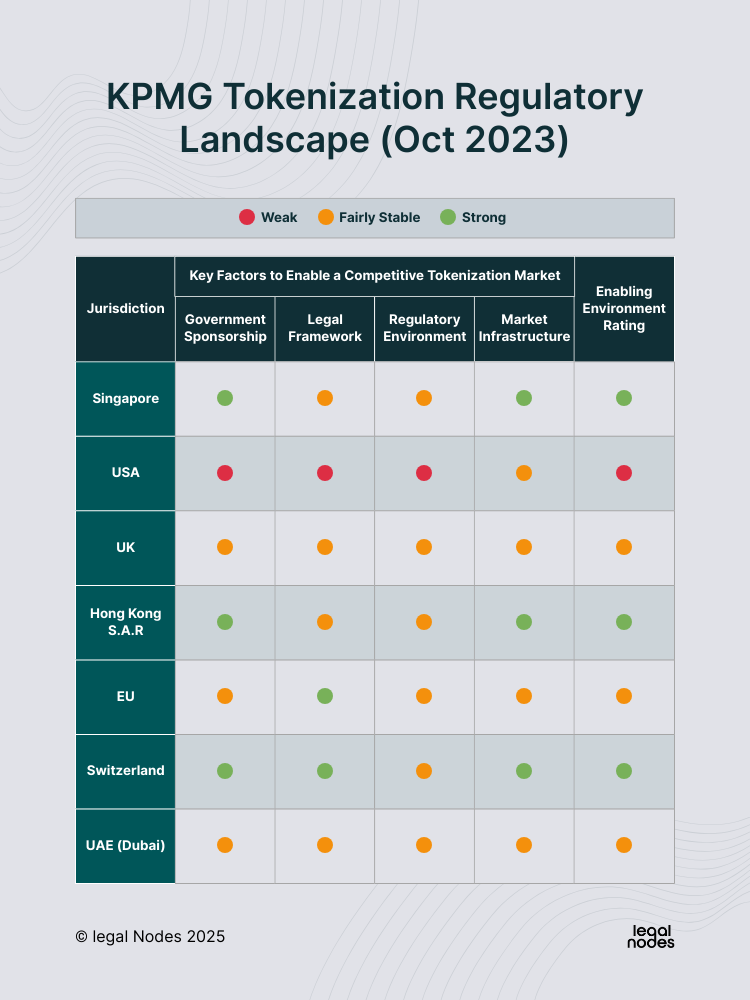
Before initiating any trade, confirm the bond is issued under an active regulatory sandbox. The SEC’s sandbox framework allows for experimental settlement mechanisms, but these are not yet universal. If the issuer or trustee is not participating in a recognized pilot program, the legal enforceability of the tokenized ownership may be ambiguous. Check the offering memorandum for explicit references to sandbox participation or pilot program approval.
Municipal bonds may exist on different distributed ledgers. If you intend to exchange one tokenized muni bond for another, or convert it back to a traditional book-entry form, verify that the platform supports cross-ledger interoperability. Without a bridge protocol or a shared ledger standard, your token might be trapped on a closed network, preventing secondary market liquidity. Ensure the platform explicitly states support for inter-ledger transfers if that is part of your strategy.
Tokenized ownership is defined by the underlying smart contract. Have a technical audit verified the contract for security vulnerabilities, particularly around ownership transfer rights and dividend distribution logic. The contract must accurately encode the bond’s economic terms, including coupon rates, maturity dates, and call provisions. If the contract code diverges from the legal indenture, the token is merely a digital receipt with no actual financial backing.
Only execute trades on platforms that maintain direct relationships with the issuing municipality or its designated trustee. These platforms act as the bridge between the blockchain and the traditional financial system. Ensure the platform provides real-time proof of ownership and can generate automated tax documents (like 1099-INT equivalents) for the tokenized interest payments. Avoid peer-to-peer exchanges that lack institutional oversight.
After settlement, monitor the bond for traditional corporate actions, such as early redemption or maturity. Even if the bond is tokenized, the underlying legal obligation remains with the municipality. Ensure your platform can automatically convert your token back to a traditional book-entry form if you wish to hold the bond to maturity or if the platform ceases operations. Failure to plan for this exit can leave you holding a non-redeemable digital asset.
Common Mistakes When Tokenizing Municipal Bonds
Tokenizing municipal bonds introduces new layers of complexity beyond traditional fixed-income settlement. While the promise of instant settlement and fractional ownership is compelling, the transition often fails due to technical and regulatory oversights. Investors and issuers frequently overlook the friction points between legacy banking infrastructure and distributed ledger technology (DLT).
Ignoring Interoperability Between Ledgers
One of the most critical errors is assuming all tokenized bonds will live on the same blockchain. Municipal issuers often operate on private, permissioned ledgers, while secondary market participants may prefer public or hybrid chains. When a bond exists on one distributed ledger and the investor wants to trade it on another, cross-chain bridges become necessary. These bridges introduce security risks and settlement delays that negate the benefits of tokenization. Without standardized interoperability protocols, liquidity remains trapped within isolated silos, making secondary trading difficult and expensive.
Overlooking Regulatory Sandbox Requirements
Tokenized securities do not exist in a vacuum; they are subject to existing securities laws, including the Securities Act of 1933 and the Securities Exchange Act of 1934. Many market participants mistakenly believe that tokenization bypasses these requirements. In reality, regulators like the SEC are actively testing these instruments through regulatory sandboxes. Failing to engage with these frameworks early can lead to compliance violations, frozen assets, or forced redemption. Issuers must ensure that their token smart contracts encode KYC/AML checks directly into the transfer logic, rather than relying on post-trade reporting.
Underestimating Oracle and Data Integrity Risks
Tokenized municipal bonds rely on oracles to feed real-world data—such as interest payments, tax collection status, or municipal defaults—onto the blockchain. If the oracle source is compromised or delayed, the token’s value may diverge from the underlying bond’s actual worth. This decoupling can trigger automatic liquidations or settlement failures. To mitigate this, issuers should use multiple, decentralized oracle feeds and establish clear off-chain dispute resolution mechanisms. Relying on a single data source is a fragile foundation for a high-stakes asset class.
Tokenized us municipal bonds: common: what to check next
Tokenized municipal bonds represent a structural shift in how fixed-income assets are managed, moving from paper-based settlement to digital ledger ownership. While the underlying credit risk remains tied to the issuer, the mechanics of holding, trading, and settling these assets differ significantly from traditional bond markets. Understanding these operational distinctions is essential for evaluating liquidity, regulatory compliance, and counterparty risk in this emerging asset class.
No comments yet. Be the first to share your thoughts!